Reviewed by: State of the Arc Electric's licensed Master Electricians.
Does a Two-Prong Outlet Mean There Is No Ground?
Often, but not always. Many older homes were wired without a separate equipment-grounding conductor, which is why two-prong receptacles were installed. Other older wiring methods may use properly installed metal raceway, armored cable, or another approved path for equipment grounding.
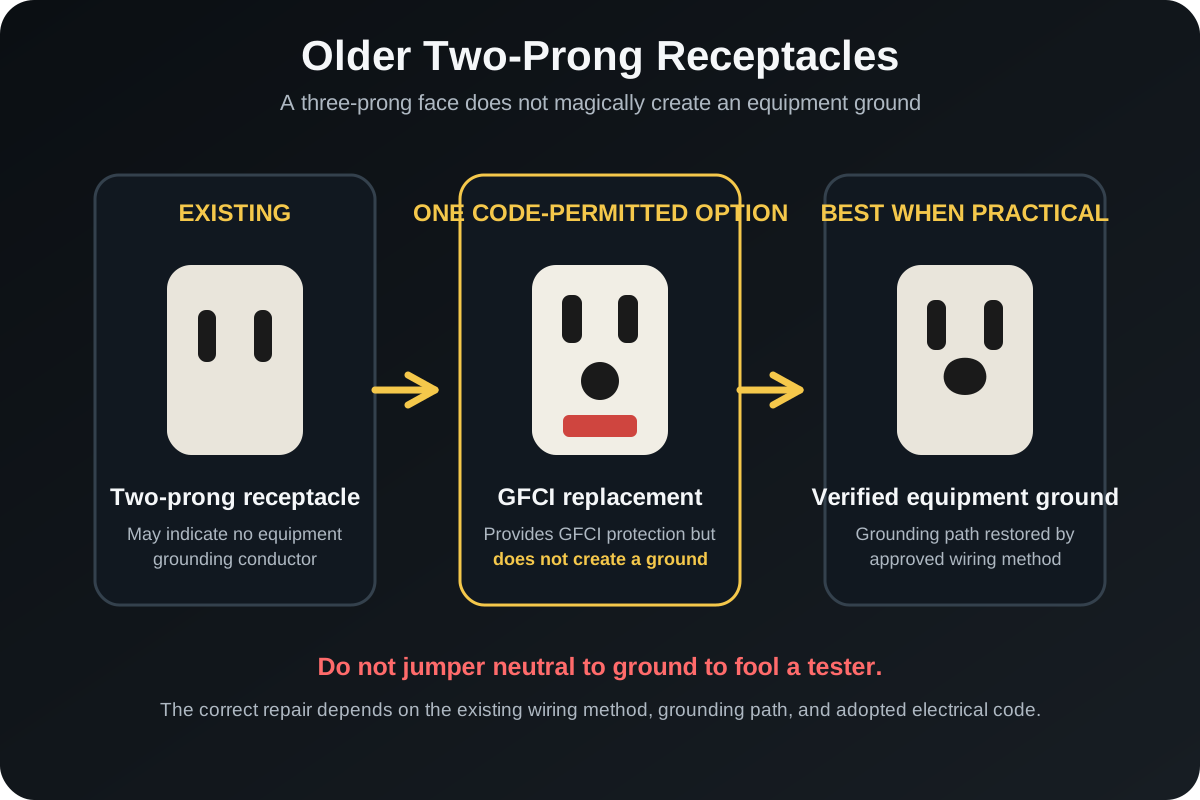
The receptacle face alone cannot tell you which situation you have. The grounding path has to be verified. That is also why a bootleg ground is not a legitimate substitute for a real equipment-grounding path.
What Are the Typical Replacement Options?
Depending on the existing wiring, the adopted code, and the condition of the circuit, common options can include:
- Keep a non-grounding receptacle: In some cases, replacing a two-prong device with another listed two-prong device is appropriate.
- Install GFCI protection: The National Electrical Code permits certain replacements of ungrounded receptacles using GFCI protection and required labeling. A GFCI can provide personnel shock protection without an equipment-grounding conductor.
- Restore a real equipment-grounding path: Depending on the wiring method, an electrician may be able to install or verify an approved equipment-grounding conductor or replace the circuit wiring.
Why Is a GFCI Not the Same as a Ground?
A GFCI monitors current leaving and returning on the circuit conductors and trips when it detects an imbalance. It does not need an equipment-grounding conductor to do that job.
But the ground slot on a three-prong receptacle serves a different purpose. It provides a low-impedance fault-current path for bonded metal parts and equipment. Installing GFCI protection on an ungrounded circuit does not magically add that grounding path.
What About Surge Protectors and Electronics?
Many plug-in surge protectors and some equipment rely on an equipment-grounding connection for part of their surge-protection strategy. A GFCI-protected but ungrounded receptacle may provide shock protection while still lacking the grounding connection that certain equipment expects.
That is one reason homeowners with sensitive electronics, computers, shop equipment, or other grounded appliances may benefit from upgrading the wiring rather than simply changing the receptacle face.
Do Not Use a Bootleg Ground
Connecting the receptacle's neutral terminal to its ground terminal is not an acceptable way to create a ground. That shortcut can fool a simple receptacle tester while putting normal neutral current onto metal parts that are supposed to be used only for grounding and fault clearing. Our bootleg-ground article explains why that tester trick is unsafe in more detail.
If the goal is to modernize older outlets, the repair should solve the actual wiring condition rather than just make a three-light tester look happy.
Related Electrical Issues
See also bootleg grounds, open electrical splices, and older electrical panels and service upgrades.