Common Signs Your Panel May Need Attention
An electrical panel does not need to be replaced just because it is old, but age, condition, capacity, and equipment type all matter. Some warning signs deserve a closer look:
- Breakers trip repeatedly without an obvious temporary overload.
- The panel, breakers, or surrounding area show heat damage, discoloration, corrosion, or a burning odor.
- You hear buzzing, crackling, or other unusual sounds from the panel.
- The panel is out of usable breaker space and has been heavily modified to accommodate new circuits.
- You are adding major loads such as an EV charger, electric heat, larger HVAC equipment, a hot tub, shop equipment, or an addition.
Panel Replacement and Service Upgrades Are Not Always the Same Thing
Sometimes the existing service has enough capacity and only the panel needs replacement. In other cases, the entire service may need to be upgraded because the building's calculated load has outgrown the existing service size. A licensed electrician should evaluate the service conductors, meter equipment, grounding and bonding, panel condition, and expected future loads before recommending either option.
What About Federal Pacific Stab-Lok Panels?
Federal Pacific Electric (FPE) Stab-Lok panels deserve special attention. The U.S. Consumer Product Safety Commission confirmed that some FPE breakers failed certain UL calibration test requirements. The CPSC closed its investigation in 1983 without making a determination that FPE breakers as a class posed a serious risk of injury, but the equipment's history is still a valid reason to have it evaluated by a qualified electrician rather than assuming it is acceptable simply because it has not caused a visible problem.
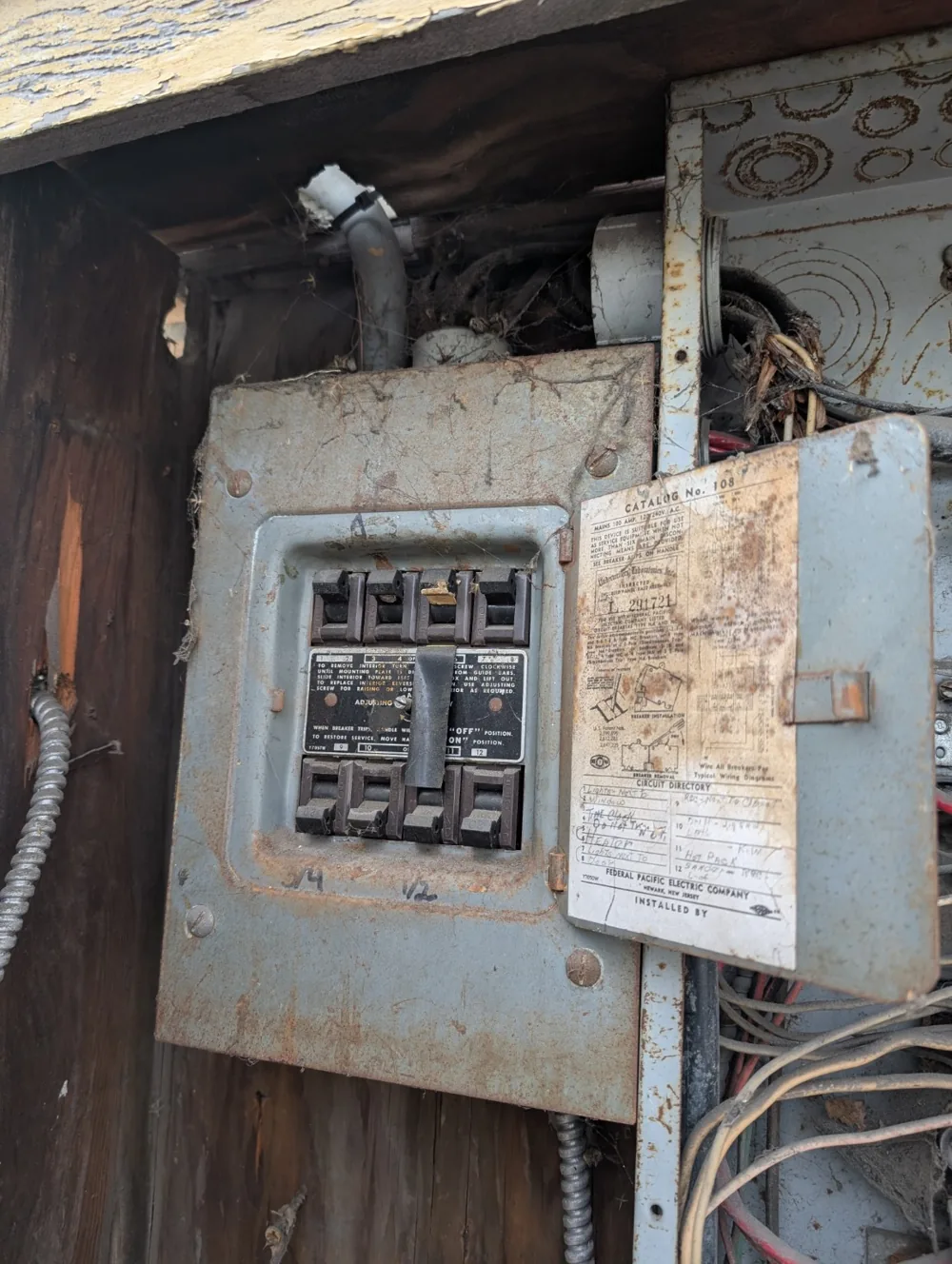
Federal Pacific Panels and Homeowners Insurance
Insurance requirements vary by carrier, policy, property, and location, but some insurers may flag Federal Pacific or Stab-Lok equipment during underwriting. Depending on the carrier, they may ask for an electrician's evaluation, documentation, or replacement before issuing or continuing coverage. If an insurer has raised the issue, ask the carrier or agent for the exact requirement in writing before assuming what they will accept.
Replacing a Federal Pacific panel for insurance eligibility is not automatically the same thing as an insurance-covered loss. The homeowner should confirm coverage and underwriting requirements directly with the insurer.
What Should You Do If You Are Unsure?
If you have an older panel, unexplained electrical symptoms, or you are planning to add significant new electrical load, have the system evaluated before problems snowball. A proper inspection can determine whether the issue is a single breaker, a panel replacement, a service upgrade, or something else entirely.
Related Electrical Issues
See also breakers that keep tripping and undersized wiring.