What Is a Lost Neutral?
"Lost neutral" is a broad term, and the symptoms depend on which neutral conductor has opened. An open neutral on one ordinary 120-volt branch circuit is not the same electrical condition as losing the neutral for a 120/240-volt service or another shared-neutral circuit.
Open Neutral on a Branch Circuit
If the neutral opens on a typical 120-volt branch circuit, lights and receptacles downstream may stop working, flicker, or behave intermittently. The circuit can still contain energized conductors, and the open neutral itself can have voltage on it through connected loads, so a dead-looking circuit is not automatically safe.
Lost Service or Shared Neutral
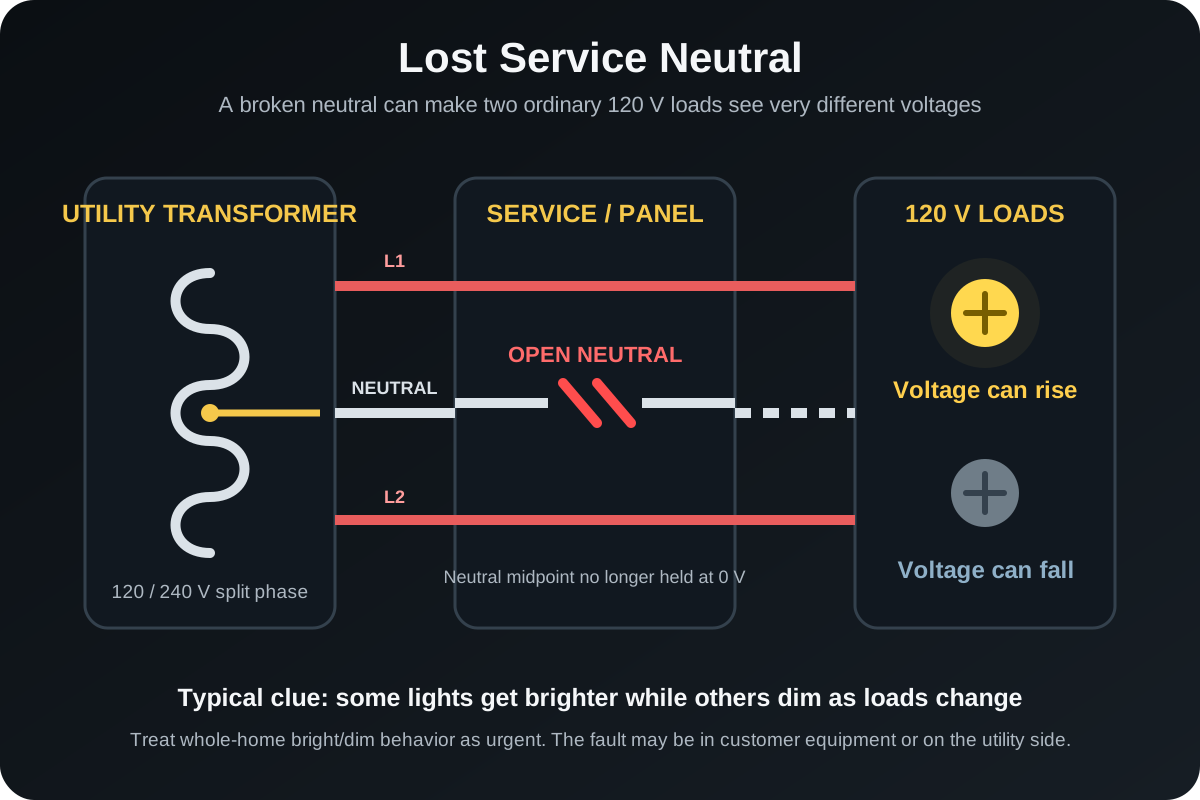
A 120/240-volt split-phase service uses the neutral as the midpoint between the two 120-volt legs. If that neutral connection opens, loads on opposite legs can effectively become a series circuit across 240 volts. The midpoint then shifts according to the connected loads instead of staying near its normal neutral potential.
That is why one group of lights may get unusually bright while another group gets dim, and why the symptoms can change when a refrigerator, microwave, heater, or other load turns on or off. Some 120-volt loads can see substantially more than normal voltage while others see substantially less.
Common Warning Signs
- Lights in some rooms become brighter while lights elsewhere become dimmer.
- Brightness or appliance behavior changes when another large 120-volt load starts or stops.
- Electronics reset, fail, or behave erratically on multiple circuits.
- Multiple receptacles or circuits show unusual voltage symptoms at the same time.
- A single branch circuit loses its return path and stops operating normally.
Where Can the Neutral Fail?
The problem can be on the customer's wiring or on the utility side. Possible locations include the service drop or underground service connection, meter equipment, service neutral termination, panel or disconnect, feeder neutral, multiwire branch circuit, junction box, or an ordinary branch-circuit connection.
What Should You Do?
If the symptoms affect multiple circuits or lights are noticeably getting brighter and dimmer, stop using sensitive equipment and treat the condition as urgent. The utility may need to inspect its portion of the service, and an electrician may need to check the service equipment and building wiring. Do not assume that a utility-side fault or an electrician-side fault can be identified safely from symptoms alone.
Related Electrical Issues
See also breakers that keep tripping and undersized wiring.